Power Tool Batteries as USB Power Sources
This post describes how to use high capacity power batteries from cordless power tools to power microcontroller projects via USB. This is a great way to power standalone projects for longer periods of time than are possible with typical Li Poly batteries.
If you have an interest in Do-It-Yourself projects, carpentry, building etc then you probably have a set of cordless power tools.
These are powered by substantial batteries and with each generation of the technology these have become lighter and more powerful.
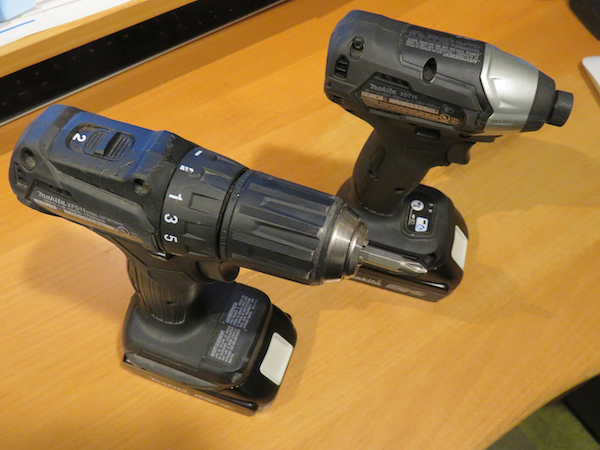
My current set of tools are from Makita and have 18V Lithium Ion batteries.
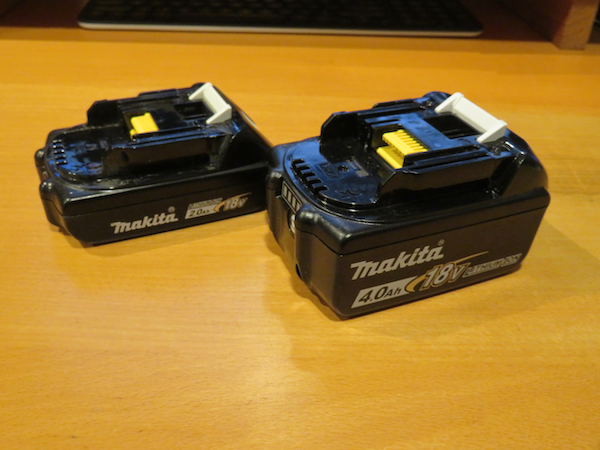
These batteries are available with several capacities. I have 2.0 Ah and 4.0 Ah (amp hours).
This capacity comes at a price, however, at $50 to $60 for each battery.
Makita and several of the other manufacturers realized that there was a market for an adapter that would let people charge their phones or tablets via a USB cable, using their batteries as the power source - ideal for a builder needing to charge a phone on site without access to regular power.
Makita’s version of this is the Makita ADP05 18V LXT Lithium-Ion Cordless Power Source which costs around $ 20 from Amazon. This unit slides onto a battery just like a power tool. It has two USB ports covered by dust caps, an On/Off slide switch and a belt clip.
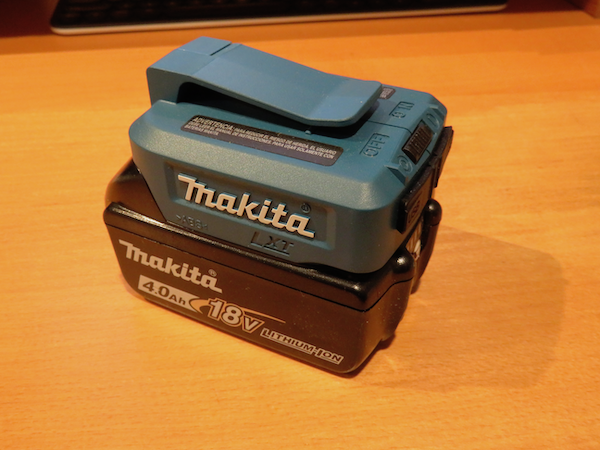
The unit can deliver 2.1A at 5 V per USB port and you can connect two ports with a suitable cable to deliver 4.2 A which is more than capable of powering a Raspberry Pi, a display and then some.
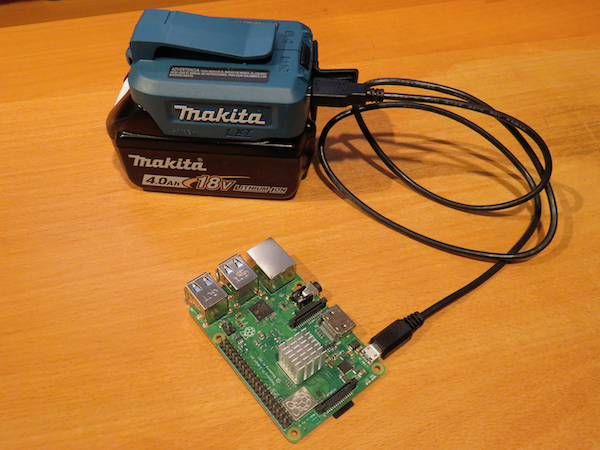
How long a battery will power your project obviously depends on the load but you run a Raspberry Pi for 24 hours with the 4.0 Ah battery with no problem.
The output is USB so you can just treat it as a regular power source. In my experiments I measured a voltage of 4.99 V which was low enough to trigger the low voltage warning on a Raspberry Pi (the yellow lightning bolt in the top right of a console display) but this did not seem to affect the operation of the Pi in the least.
The adapter is pretty simple in design with just two prongs that connect to the battery. The battery itself has those as well as a seven pin connector that only appears to be used by the battery charger - probably to measure charging progress or faults.
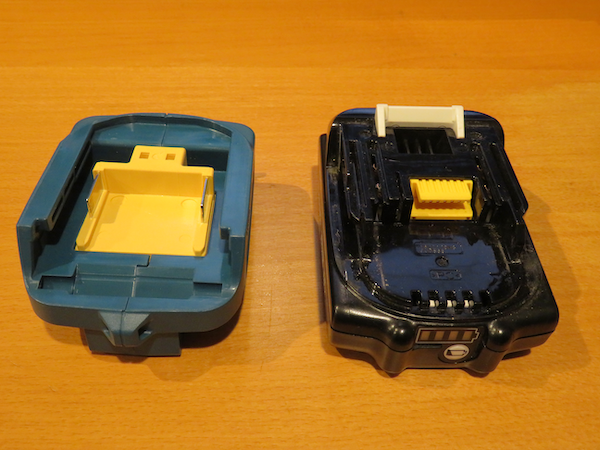
A nice feature of the batteries is a series of red leds that show how much pwer is left when you push the small button below them. This turns out to be very useful.

Because they are designed for use with power tools, these batteries are pretty rugged. There does not appear to be any problem with running the battery all the way down and then recharging it.
If you need more than 2.1 A then you can connect the two USB ports using a special USB ‘Y’ cable to get 4.2 A - for example StarTech.com 3 ft USB Y Cable for External Hard Drive USB A to Micro B
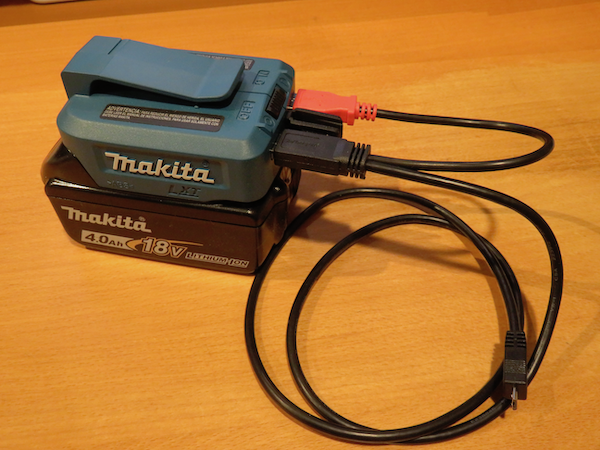
These batteries would be an expensive solution to powering your projects if you don’t already have a set of power tools. But if you already made that investment then an additional $20 gives you a very useful capability.
As a bonus you have a nice way to charge your phone or tablet next time you lose power !
My gear is all Makita but Dewalt and Milwaukee power tools have effectively the same thing and there are multiple third party copycat devices available on Amazon.